
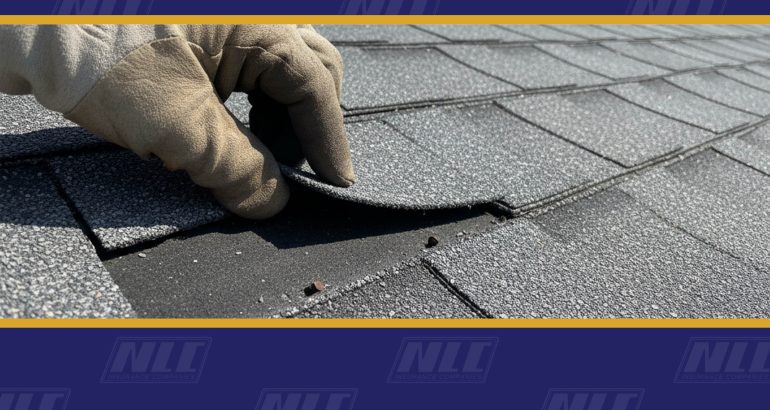
Protecting Your Roof and Your Wallet:
How to Spot and Stop Roofing Fraud
Your roof is one of the most important parts of your home and one of the most expensive to replace. Unfortunately, that makes it a prime target for scammers. Roofing fraud is on the rise, often following major weather events like snowstorms, hailstorms, windstorms, or heavy rains.
These fraudulent schemes don’t just cost homeowners money, they also drive-up insurance premiums and put honest contractors at a disadvantage. At NLC Insurance Companies (NLC), we’re seeing more claims connected to roofing scams than ever before. This guide will help homeowners recognize the warning signs, understand what’s covered by their policy, and take practical steps to protect their homes and their finances.
What Exactly Is Roofing Fraud?
Roofing fraud happens when a contractor, adjuster, or even a homeowner intentionally misrepresents the condition of a roof or the cost of repairs to collect insurance money.
It’s not always as obvious as a fake invoice or a broken promise, many roofing scams start with a friendly knock at the door after a storm.
Here’s how it often begins:
- A contractor claims to have “noticed storm damage” while working in your area.
- They offer a free roof inspection and tell you they can “work directly with your insurance company.”
- They say things like “you could qualify for a new roof at no cost to you” or “your insurance owes you a replacement.”
It sounds like a win, but it’s often a trap.
Fraudulent roofers can create fake damage, exaggerate what they find, or pressure homeowners into signing paperwork that gives them control over the insurance claim. Once that happens, homeowners can lose leverage, pay more out of pocket, or even face legal consequences if the claim turns out to be false.
How Roofing Fraud Hurts Homeowners
Roofing fraud doesn’t just target insurance companies it directly impacts you, the policyholder.
Homeowners who fall victim to these schemes often face:
- Out-of-pocket costs for work that wasn’t needed or done incorrectly.
- Denied claims because of false or exaggerated information submitted.
- Liability if an unlicensed or uninsured contractor is injured on your property.
- Legal consequences, since filing a false claim, even unknowingly, can be considered insurance fraud under various state laws.
In many cases, victims don’t even realize what’s happened until later when their claim is denied for “misrepresentation”, their insurance renewal notice comes with a higher premium, or their insurance is non-renewed.
A Perfect Storm for Roofing Scams
While Florida may get the headlines for hurricane-related roof fraud, New England has its own perfect recipe for problems: older & aging homes, unpredictable weather, and post-storm urgency.
In the three states that NLC services, the scams tend to spike after:
- Strong wind or hail events (common along the shoreline and in inland valleys)
- Heavy snow or ice dams (especially damaging to older roofs)
- Hurricane, Named Storms or Nor’easters that rip off shingles and flashings
Scammers exploit the confusion and stress that follow these storms. They use tactics like:
- Storm chasing: out-of-state contractors flood affected neighborhoods offering quick, cheap repairs.
- Door-to-door solicitations: targeting elderly homeowners or those with visible roof wear.
- “No deductible” offers promising to “eat” the homeowner’s deductible, which is illegal.
Contractor Fraud vs. Insurance Fraud
They sound similar, and often overlap, but there’s an important distinction:
Contractor Fraud | Insurance Fraud |
A contractor lies or deceives a homeowner for financial gain (e.g., unlicensed public adjusting services, overcharging, using poor materials, or billing for work not done). | Someone (contractor, homeowner, or adjuster) lies to the insurance company to receive payment they’re not entitled to. |
Examples: billing for new shingles but only replacing a few, disappearing after receiving a deposit, or creating fake damage. | Examples: inflating a repair estimate, claiming storm damage when the roof is simply old, or falsifying photos to get a payout. |
Investigated by state consumer protection or licensing boards. | Investigated by state insurance departments and can carry criminal penalties. |
A dishonest roofer can easily drag a homeowner into both kinds of trouble.
For instance, if an exaggerated claim is filed, the result can lead to claim denial, cancellation, or even referral to the state fraud bureau.
What Homeowners Insurance Actually Covers for Roofs
Homeowners insurance is designed to protect you from sudden, accidental damage not gradual wear and tear.
A standard policy is designed to cover roof damage from:
- Windstorms and hail
- Fire or lightning
- Falling trees or debris
- Ice or snow collapse (if sudden and accidental)
But policies typically do not cover:
- Routine aging or deterioration
- Damage caused by poor maintenance
- Cosmetic issues like minor granule loss or discoloration
If a contractor says, “Insurance will pay for a new roof because yours is old,” that’s your cue to hang up.
Legal Protections and Red Flags
Consumer protection laws are in place to prevent homeowners from being taken advantage of by unscrupulous contractors. Below is a list of some state specific requirements contractors must adhere to:
In Connecticut:
- Contractors must hold a Home Improvement Contractor (HIC) registration through the Department of Consumer Protection (DCP).
- Contracts must be in writing, with clear scope, cost, and cancellation terms.
- Homeowners have a three-day right to cancel any home improvement contract signed at their residence.
In Rhode Island:
- Contractors must be registered and insured through the Contractors’ Registration and Licensing Board (CRLB).
- The registration number must appear on all contracts, ads, and business cards.
- Unregistered contractors can be fined or prosecuted for fraud.
In Massachusetts:
- Contractors (or firms) who solicit, bid on or perform “home improvement” work on such residences must register as a Home Improvement Contractor (HIC) with the Office of Consumer Affairs and Business Regulation (OCABR)
- The law sets out specific contract requirements for jobs over $1,000: written contract with start/end dates, description of work, schedule of payments.
- It prohibits certain acts by contractors: e.g., demanding more than 1/3 of project cost up front, abandoning jobs without justification, misrepresenting registration status.
- For homeowners, if you hire a contractor who is not registered when the law requires it, you lose certain protections (like access to the Guaranty Fund).
If you suspect insurance fraud (e.g., a contractor is misrepresenting damage, inflating costs, etc.), you can report it to the Division’s Consumer Services Unit or the Fraud Bureau.
If a roofer refuses to show a license, won’t give a written estimate, or pressures you to sign immediately that’s your flashing red light.
How to Protect Yourself from Roofing Fraud
Here’s a practical, NLC-endorsed checklist for homeowners:
Before Hiring Anyone:
- Check credentials. Verify the contractor’s license with the CT DCP or RI CRLB or MA OCABR
- Ask for proof of insurance. Make sure they carry both liability and workers’ comp coverage.
- Get multiple quotes. A legitimate contractor will welcome comparison.
- Avoid door-to-door offers. Reputable roofers don’t knock unsolicited after storms.
- Never sign an “assignment of benefits” (AOB) that gives a contractor power to handle your claim directly; it can strip you of control.
During the Job:
- Keep records. Save photos, invoices, and correspondence.
- Never pay in full upfront. A small deposit (often no more than one-third) is reasonable.
- Monitor progress. Visit the site daily or ask for status updates.
After the Job:
- Inspect the work. Make sure materials and quality match the contract.
- Get a lien waiver. This prevents subcontractors from filing claims against your property.
- Report suspicious behavior. Contact your insurer, the state’s consumer protection office, or local police.
What NLC Is Doing to Help
At NLC, we work closely with homeowners, local adjusters, engineers and experts to detect and prevent fraudulent roofing claims. Our team monitors regional weather patterns, claim trends, and contractor activity across Connecticut, Rhode Island, and Massachusetts.
We also invest in education and prevention because the best way to stop fraud is before it starts.
Homeowners insured with NLC benefit from:
- Transparent claim handling, you’ll always know what’s covered and what isn’t.
- Local adjusters who understand New England construction and weather.
- Fraud prevention tips delivered through our blog, newsletters, and social media.
If you ever suspect questionable contractor behavior, your first call should be to your insurance agent or claims representative. We’d rather help you before you sign on the dotted line than after a problem has occurred.
Final Thoughts: Stay Smart, Stay Skeptical
Roofing scams are evolving, and fraudsters are getting bolder but homeowners who know what to look for are much harder to fool.
Remember:
- Storm damage can be legitimate, but “free roofs” aren’t.
- Insurance is there to help after real losses, not routine wear.
- The fastest way to lose money is to rush into a deal without checking credentials.
- Contractors cannot act as public adjusters without proper licenses.
By partnering with a trusted local contractor and a reputable insurer like NLC, homeowners can keep their roofs in good condition, their valid claims covered, and their peace of mind intact.